

A new San Francisco political group is launching an ad campaign that’s sure to draw attention: a series of pastel-colored ads that joke about the city’s response to the fentanyl crisis and are summarized under the snappy slogan, “This is Fentalife!”
This week, the ads will run in the Tenderloin and South of Market neighborhoods, the two places where overdose deaths are most common. The group responsible – TogetherSF Action – insists the ads are not insensitive to the hundreds of people who have died in the city from drug overdoses and that the nickname “That’s Fentalife” in the ads is out of compassion.
TogetherSF Action is one of several new advocacy groups in the city joining the moderate faction of San Francisco politicians and shares their goal of providing more law enforcement resources for drug-related crime surveillance.
Kanishka Cheng, co-founder and executive director of TogetherSF Action, told SFGATE that the ad campaign was timed to align with the city’s budget process in hopes the ads will persuade residents to demand more money for law enforcement and fentanyl addiction services . The interview has been slightly edited and shortened for clarity.
SFGATE: This design is a little cheeky. What would you say to people who find it frivolous and claim you are taking lightly a crisis that has killed hundreds of people?
Kanishka Cheng: The reason it looks frivolous or cheerful is to create a sharp contrast with the darkness of reality. We don’t want to try too hard because we’re jaded and used to the situation. The purpose of the font and bright colors is to create contrast. It’s about how that bright Californian lifestyle we’re striving for in San Francisco should compare to the reality on our streets.
We have to somehow shock people to wake up and take action.
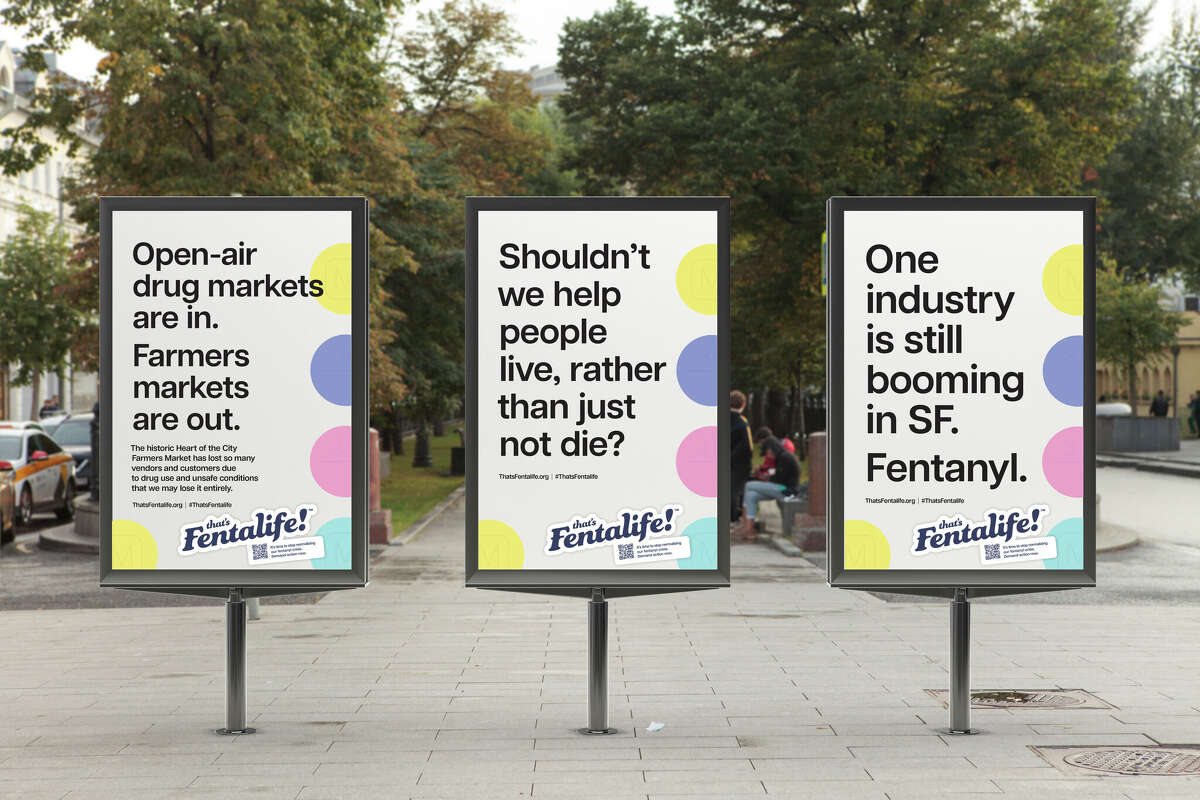
Models for an upcoming ad campaign by TogetherSF Action, a new San Francisco political advocacy group.
Courtesy of TogetherSF ActionSFGATE: Let’s say someone who lost a loved one to fentanyl saw one of these ads, especially one of the more sarcastic ones like “No screaming while selling drugs.” Kids are trying to sleep here.” How do you think that affected them could feel?
Cheng: Before we proceeded with this effort, we spoke to people in the recovery community and to Mothers Against Drug Addiction and Deaths about how they were feeling. Many of them have lost people or their children are suffering on the streets of San Francisco. They felt strongly and passionately that we had to do this.
We couldn’t have done it without their approval, and you’ll hear that from them. Demanding action is the most important thing, and we have to be bold about it.
(In an email to SFGATE, Mothers Against Drug Addiction and Death co-founder Jacqui Berlinn wrote, “Yes, my group Mothers Against Drug Addiction and Deaths supports the Fentalife ad campaign and feels it is necessary.)
SFGATE: In terms of “calling for action,” what exactly does TogetherSF Action hope to achieve through policy action?
Cheng: The most urgent concern is budget investments. We need to consider both the supply side and the demand side of the fentanyl market. On the supply side, that’s a fully staffed police department and the involvement of state law enforcement agencies. We need that partnership and continued law enforcement cooperation.
On the demand side, we need a real recovery in demand. The goal (of the Department of Health) is to help people recover within 10 days and we think 10 days is unacceptable. If someone lives out there for 10 more days, they may die. We need stabilization centers, lowered beds, new facilities, and the inclusion of long-term treatments.
These are our budget priorities. Politically, we want the city to focus on more than just overdose prevention and elimination. Of course we have to do this, but we want to find more ways to get people into treatment and restore their lives.
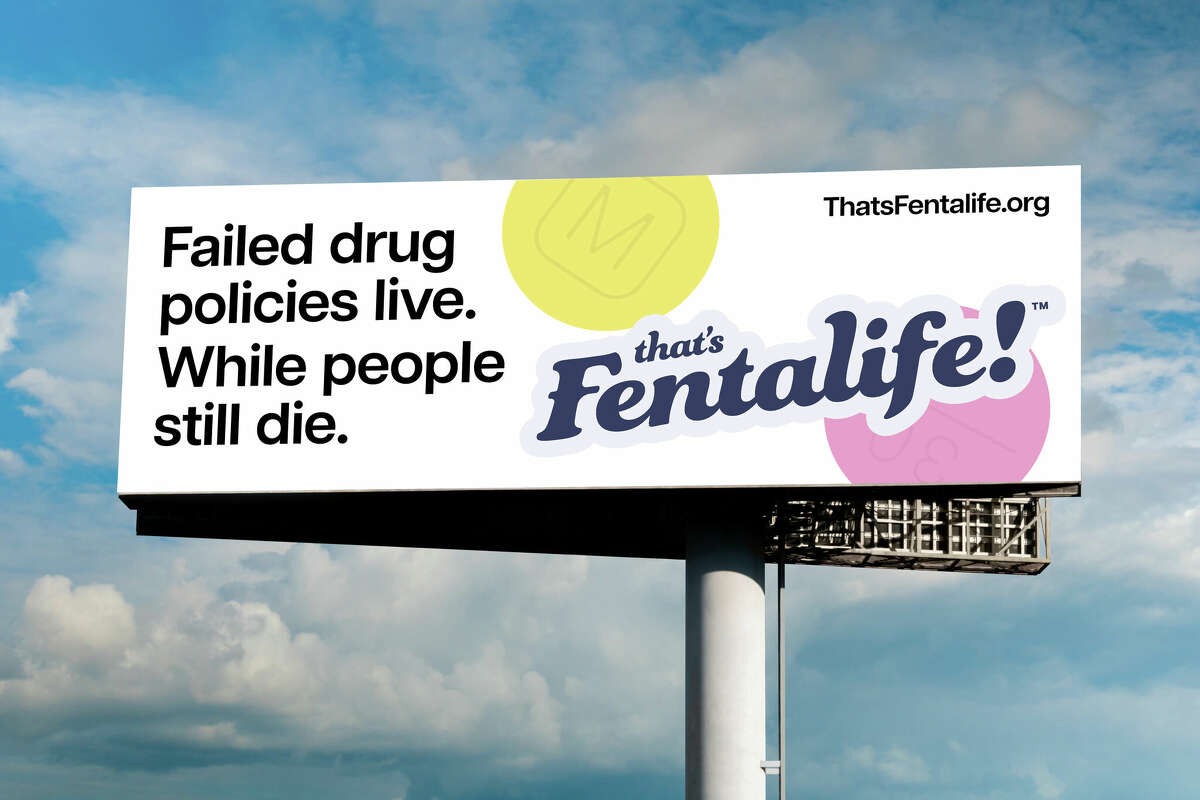
Model for an upcoming ad campaign by TogetherSF Action, a new San Francisco political advocacy group.
Courtesy of TogetherSF ActionSFGATE: The ads are critical of harm reduction guidelines, and you mentioned reversing an overdose. Do you support safe consumption sites?
Cheng: We have not yet taken an official position on this. They play an important role in maintenance, but we think the city puts too much emphasis on harm reduction. What is happening is that we are getting an adulterated version of it, which is not the case in other countries that have had success with safe consumption sites.
In Portugal, for example, there are safe consumption points, but there are also convalescent treatments available on request for those who need them. The goal is to get people into recovery and not just keep consuming them indefinitely.
SFGATE: It sounds to me like you are talking about involuntary treatment since many addicts refuse treatment. But that’s a matter of state law, isn’t it?
Cheng: This definitely needs to be tackled at the country level as city leaders believe it is a tool missing from the toolbox. Now, at the city level, there are things we can do to improve our local treatment. The District Attorney has a policy of pooling drug possession charges to connect people to service, and we can strengthen our mental health and substance abuse diversion programs.
SFGATE: Does anyone in the city actually resist you when it comes to expanding access to services? All of the solutions you discussed — whether it was on-demand treatment, full services, more beds, or improving distraction programs — when you hear city progressives like Dean Preston and Hillary Ronen talk about addiction, those are all things they do support.
Cheng: I don’t think anyone is fighting us for the services. We argue that we must provide both the carrot and the stick. In San Francisco we have a habit of not doing the stock part; We just want to do the carrot, and that’s where the tension arises. There are people who don’t want to pursue law enforcement, and that ideology is where we are today.
SFGATE: Long story short, what would it look like if you could wave a magic wand to create your favorite law enforcement response?
Cheng: It looks like a police agency that is fully staffed and well trained and coordinated with federal and state law enforcement agencies. Everyone must row together in the same direction and pursue the same goals.
SFGATE: And if it turns out that law enforcement, when rowing in the same direction and trying to crack down on dealers, is finding a lot of overlap between drug dealers and drug users, that means a return to the war on drugs and incarceration of drug users, so?
Cheng: Absolutely not. In Portugal, if dealers are also found to be addicts, they are diverted to treatment programs. It needs nuance and we should be able to exercise discretion on people arrested for drug crimes.
SFGATE: Are the ads nuanced?
Cheng: The ads are designed to grab your attention. I hope people use the QR code in the ads to see this nuance on our site. I think we know it’s difficult to convey nuance in advertising and in politics in general.

Models for an upcoming ad campaign by TogetherSF Action, a new San Francisco political advocacy group.
Courtesy of TogetherSF Action
Post a Comment