

Wed, 05/17/2023 – 09:39 am | From: Van Arnold
Seatrec, a renewable energy company that harvests energy from temperature differences in the environment, and the Roger F. Wicker Center for Ocean Enterprise at the University of Southern Mississippi (USM) announce today the signing of a Memorandum of Understanding (MOU) to improve the Predicting rapid hurricane intensification and monitoring endangered rice whales in the Gulf of Mexico.
The MOU calls for the deployment of two sets of Seatrec’s InfiniTE™ floats, each customized for a different mission, utilizing the system’s unique modular design and clean, renewable energy technology that harnesses power from the ocean’s temperature differentials.
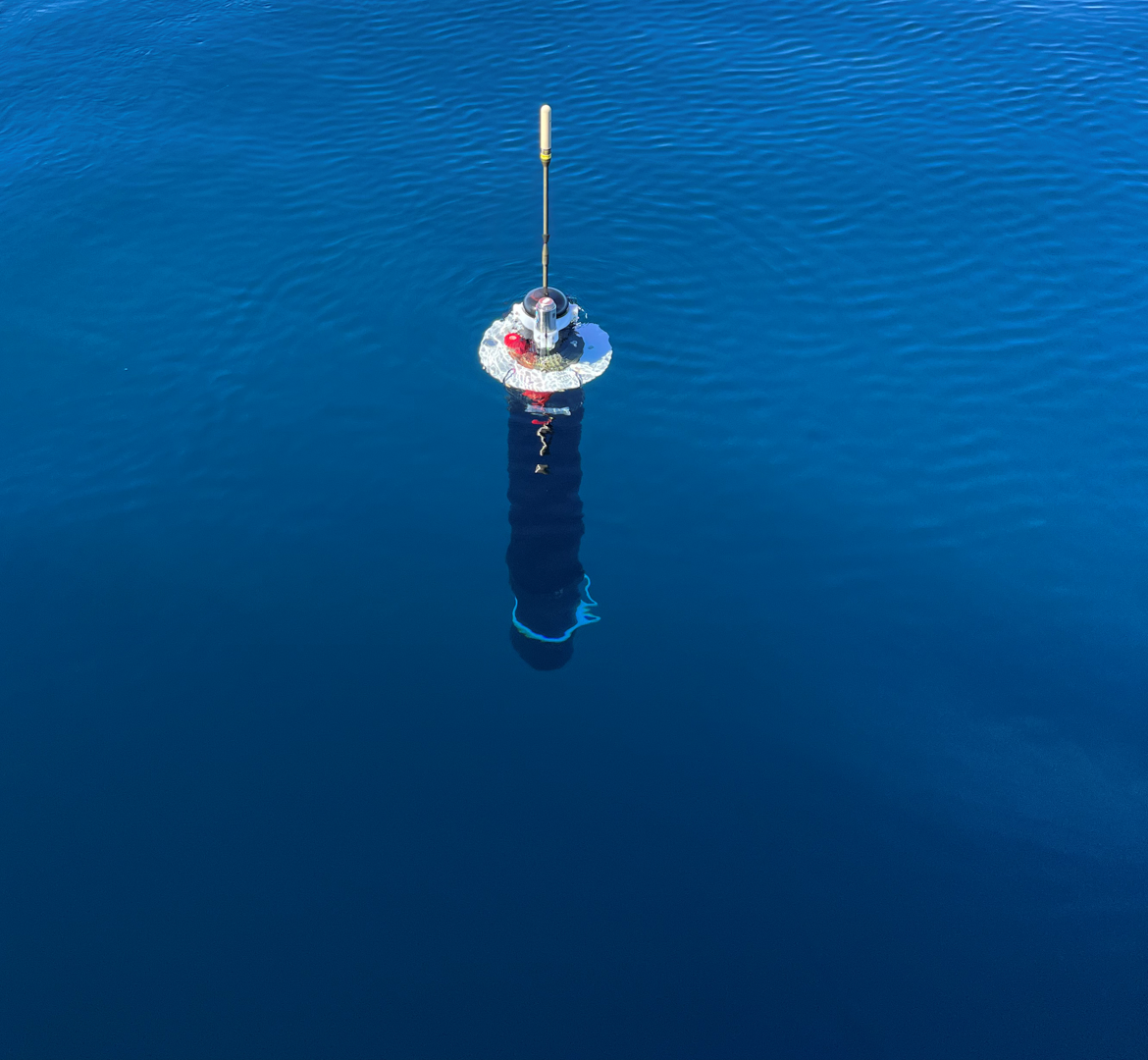 A set of floats will be equipped with an array of instruments capable of taking readings up to three times a day to track water temperatures and other data scientists believe may be contributing to the rapid intensification of hurricanes like Katrina, Irma and Ian contribute. The second group of floats will use a passive acoustic hydrophone to monitor the endangered rice whales, with the last 30 to 50 species of this species roaming the northeastern waters of the Gulf.
“There is an urgent need to better understand the Gulf of Mexico, both in terms of its human impact in the form of extreme weather events and human impact on the natural ecosystem,” said Yi Chao, Ph.D., the CEO and founder of Seatrec. “The flexibility to quickly and inexpensively deploy diverse mission-specific instrument clusters on autonomous deep-submersible vehicles powered by a clean, renewable energy source gives scientists like those at USM important tools to collect data that were not possible with previous technologies. “
Rice whales belong to the baleen whale family (Balaenopteridae). With probably fewer than 100 individuals remaining, rice whales are among the most endangered cetaceans in the world. The species’ recovery depends on the protection of each remaining whale.
The MOU follows Seatrec’s completion of the six-month Gulf Blue Navigator program administered by USM and SeaAhead with partners including Jackson State University. The program aims to help scale blue tech startups.
“Energy has long been a limiting factor, often limiting the types of instruments deployed at sea, their lifespan and the amount of persistent data they can collect,” explains Dr. Kelly Lucas, USM Vice President for Research. “Seatrec’s ability to provide clean, renewable power for vertically integrated and modular instrument arrays opens the door to a variety of applications that will help us better understand and protect the oceans.”
Hailey Bathurst, program manager for the Gulf Blue Navigator, added, “Seatrec exemplifies what the Navigator program is designed to do: to help later-stage start-ups gain a foothold in the Gulf of Mexico, to work with USM’s core facilities, and to… join a supportive program.” Ecosystem. This MOU and the others being finalized between USM and the initial members of the Gulf Blue Navigator cohort truly illustrate the potential of the program.”
The Roger F. Wicker Center for Ocean Enterprise serves as a global center for the advancement of unmanned maritime systems, ocean data science, maritime cyber research and blue-tech workforce training. The 62,500-square-foot center is comprised of multiple facilities that bring together federal, industry and academic partners, creating a collaborative environment to accelerate the development and adoption of new technologies in the fast-growing ocean economy.
Entrepreneurs and startups developing solutions to global challenges use the center to benefit from first-class marine research capacities and to network with university research scientists.
“The Gulf Blue Navigator program has already begun to have an economic impact on the Mississippi Gulf Coast,” said Dr. Jason McKenna, director of research, development, testing, evaluation and training at the Wicker Center. “This is the first of many follow-up initiatives between USM’s world-class research centers and the first graduate cohorts of the Navigator program and demonstrates the ability of our coastal research ecosystem to partner with Mississippi’s blue technology and contribute to growth.”
Seatrec’s groundbreaking power harvesting system uses phase change materials to harvest energy from temperature differences between the different depths of the ocean. These materials contract and expand, creating pressure that is trapped and converted into electricity. The clean, virtually unlimited power allows scientists to use sensors that would normally require shore power or direct ship support via tethering.
The “plug-and-play” modularity of the InfiniTE™ Float platform vertically integrates different sensors tailored to specific areas of investigation.
hurricane forecast
A better understanding of the rapid intensification of severe storms and hurricanes is a particularly urgent goal, as annual economic losses from such storms are estimated at US$54 billion. Traditional floats (commonly known as Argo) use primary batteries and typically only profile once every 10 days, which is insufficient to measure the intensity of storms that can flare up in as little as 24 hours. Capable of sampling up to three times per day, Seaterc’s InfiniTE™ floats provide 30 times more data than the current standard Argo floats.
whale surveillance
Studies show that human noise has harmful effects on a wide range of organisms, including marine mammals. Hydrophones are needed to quantify the impact of these sounds on marine mammals. Hydrophones mounted on Seatrec’s InfiniTE™ floats provide a cost-effective, autonomous platform to collect soundscape data at varying depths for years to come.
Seatrec will establish a long-term presence in the Gulf of Mexico to support the MOU missions with a satellite office provided by the Gulf Blue Navigator program while its headquarters will remain in Vista, California:
About Seatrec
Seatrec designs and manufactures power generation systems that generate electricity from naturally occurring temperature differences in seawater. This renewable energy can be used to power deep-sea oceanographic research devices such as floats, gliders and autonomous underwater vehicles (AUVs), resulting in the most scalable and cost-effective deep-sea data collection possible. Seatrec technology was developed in 2016 by CEO Dr. Yi Chao, originating from NASA’s Jet Propulsion Laboratory at the California Institute of Technology to provide clean energy for remote off-grid locations. The company’s headquarters are in Vista, California. Find out more on the Seatrec website and @seatrecinc.
Post a Comment